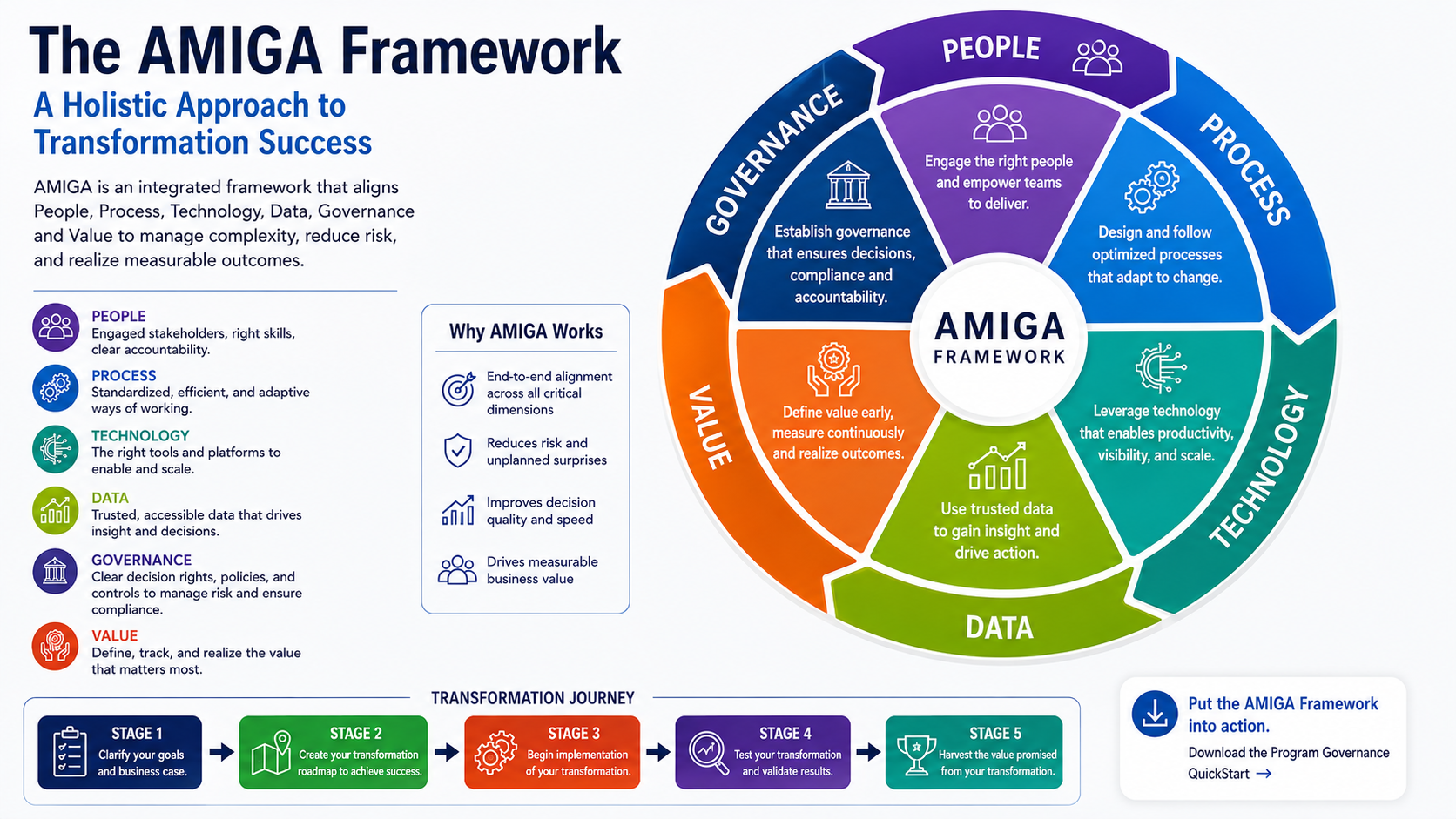
Decision Rights Matrix: Who Should Make Transformation Decisions
Explains why a decision rights matrix solves a different problem than a RACI chart, and walks through building one around actual decision types rather than generic roles.
Read More →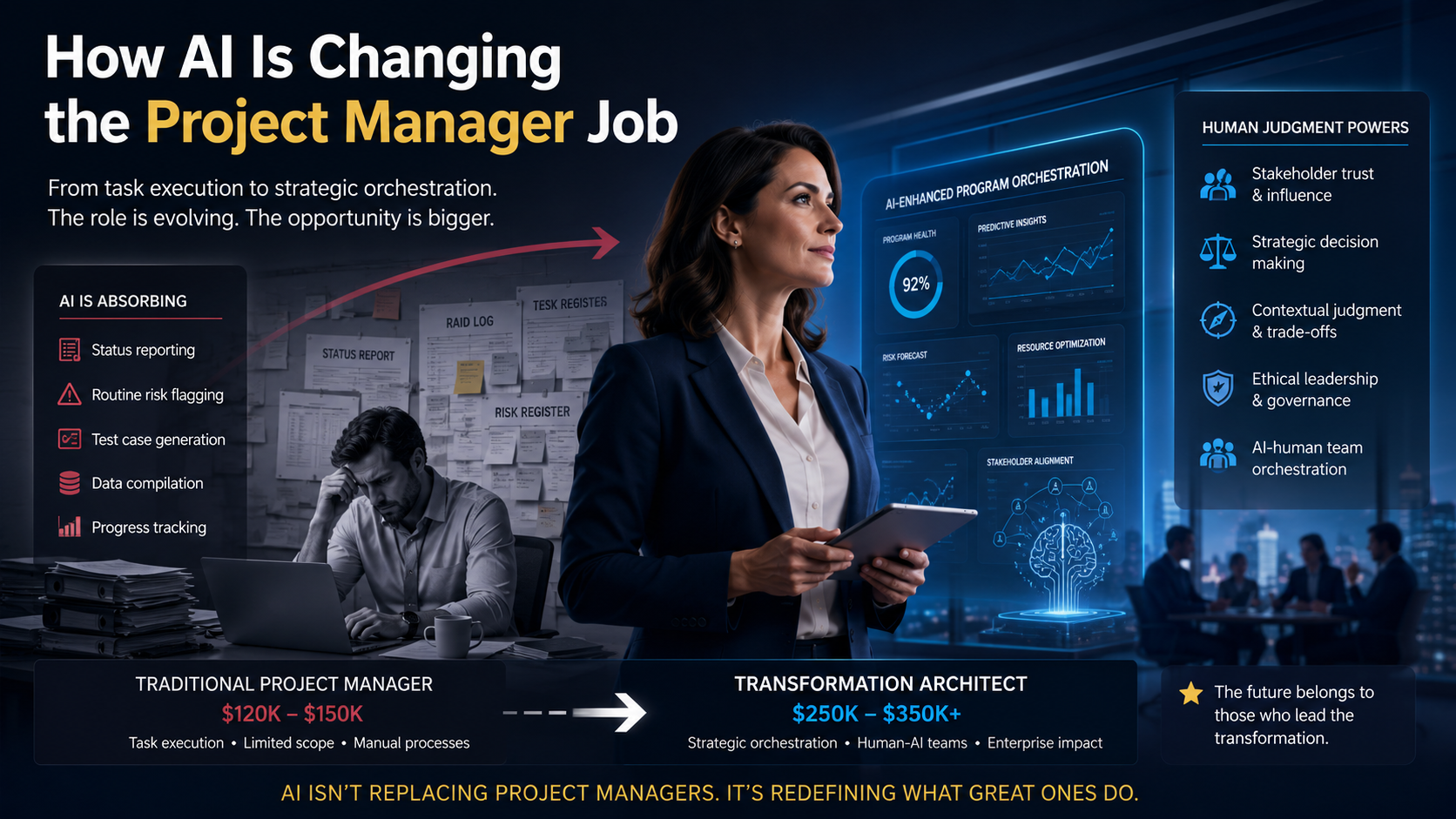
How AI Is Changing the Project Manager Job
Distinguishes tasks AI is absorbing from skills becoming more valuable, and explains why the shift is producing a new premium role — transformation architect — rather than eliminating project management altogether.
Read More →
AI-Powered RAID Analysis: Catching Risk Before It Becomes an Issue
Explains how AI-powered RAID analysis works, why it catches risk patterns earlier than manual weekly reviews, and where human judgment on Key Decisions still can't be automated.
Read More →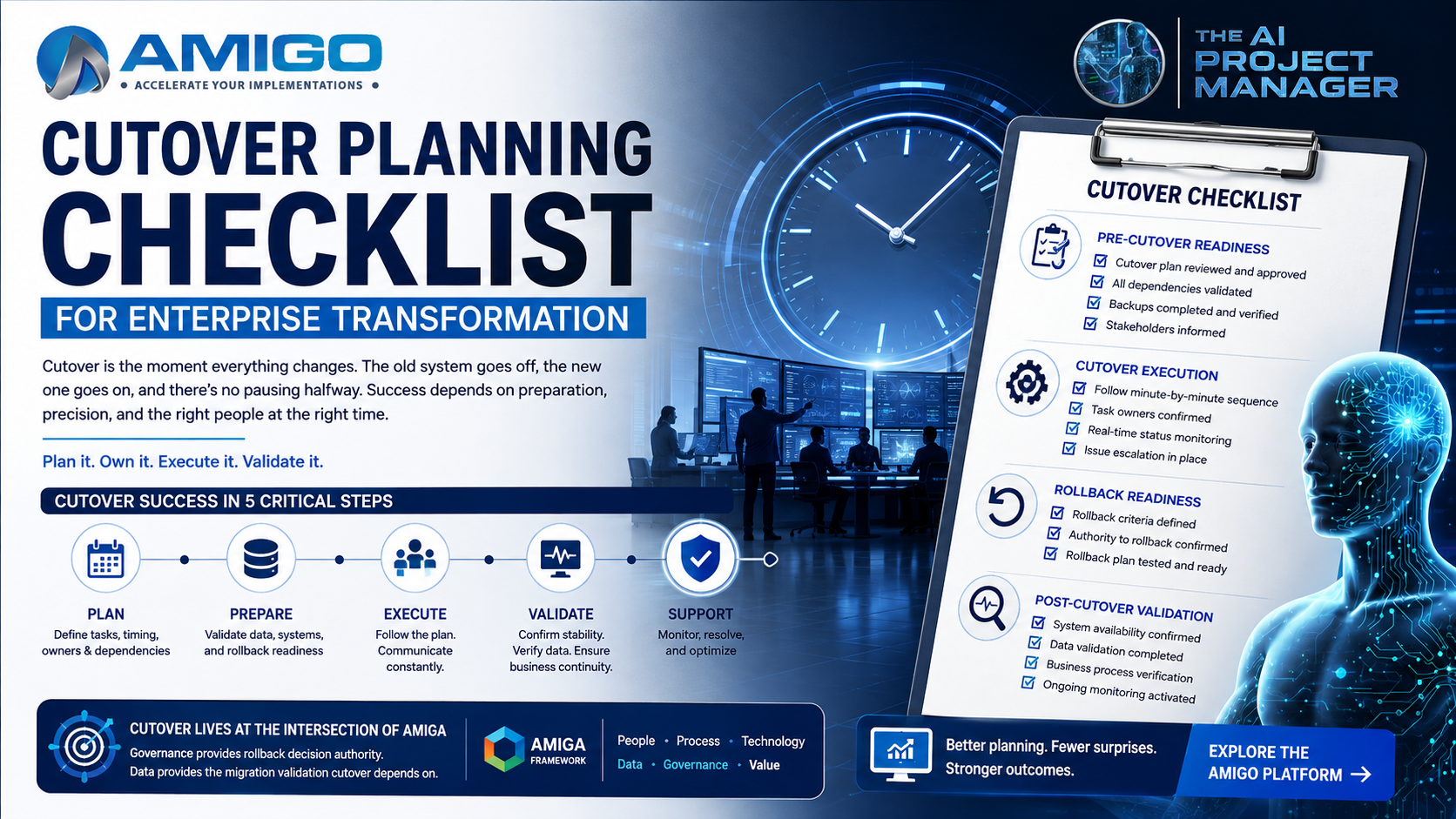
Cutover Planning Checklist for Enterprise Transformation
Explains why cutover planning is a distinct discipline from general project scheduling, and covers the categories a real cutover plan needs sequencing, rollback criteria, communication, and post-cutover validation.
Read More →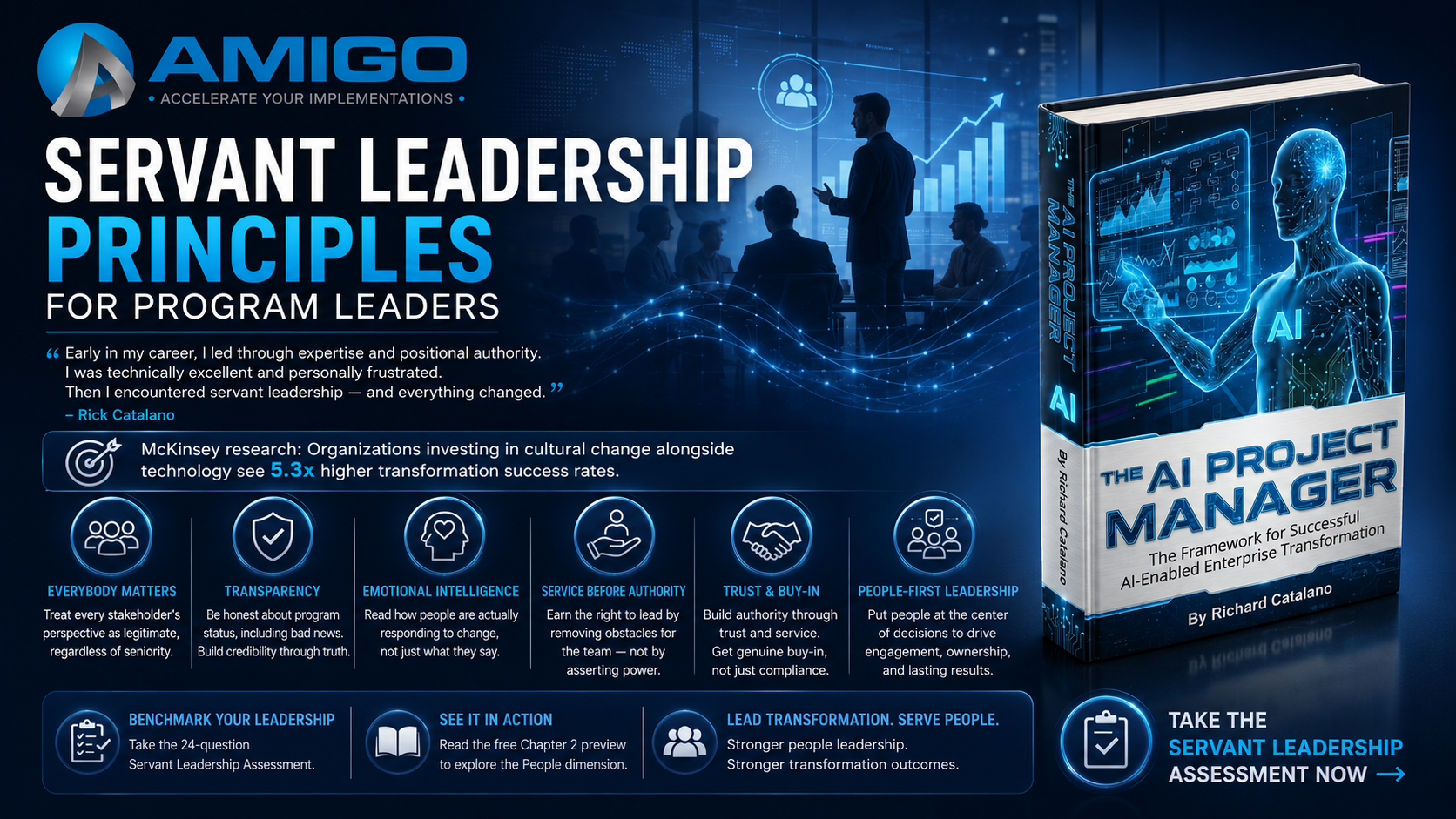
Servant Leadership Principles for Program Leaders
Introduces the servant leadership principles at the foundation of the AMIGA Framework's People dimension, explains why authority built through service outperforms positional authority in transformation programs, and points to the book for the complete set.
Read More →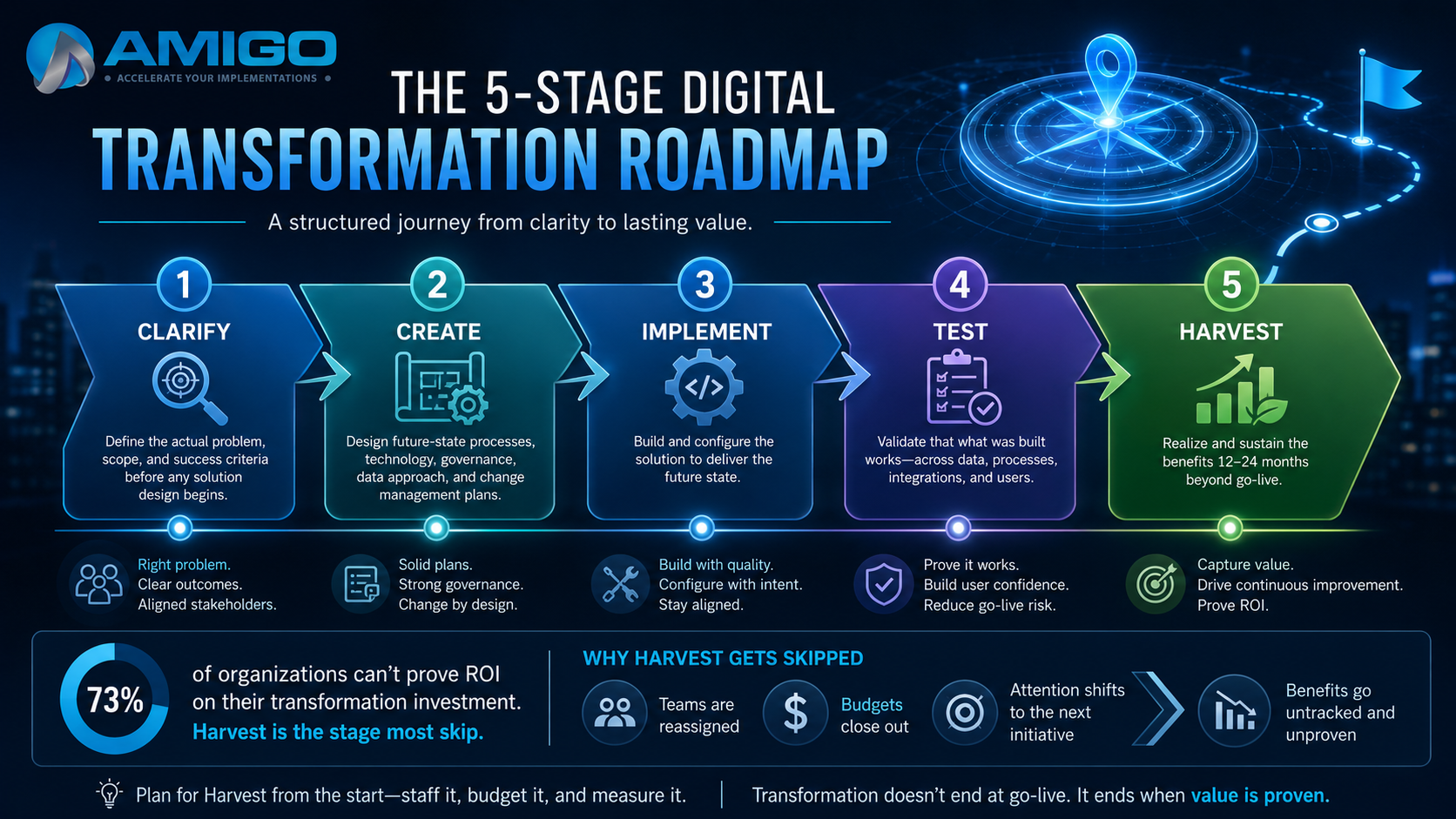
The 5-Stage Digital Transformation Roadmap
Walks through the AMIGA Framework's five program stages and explains why most organizations wrongly treat go-live as the finish line instead of the start of the final, most consequential stage.
Read More →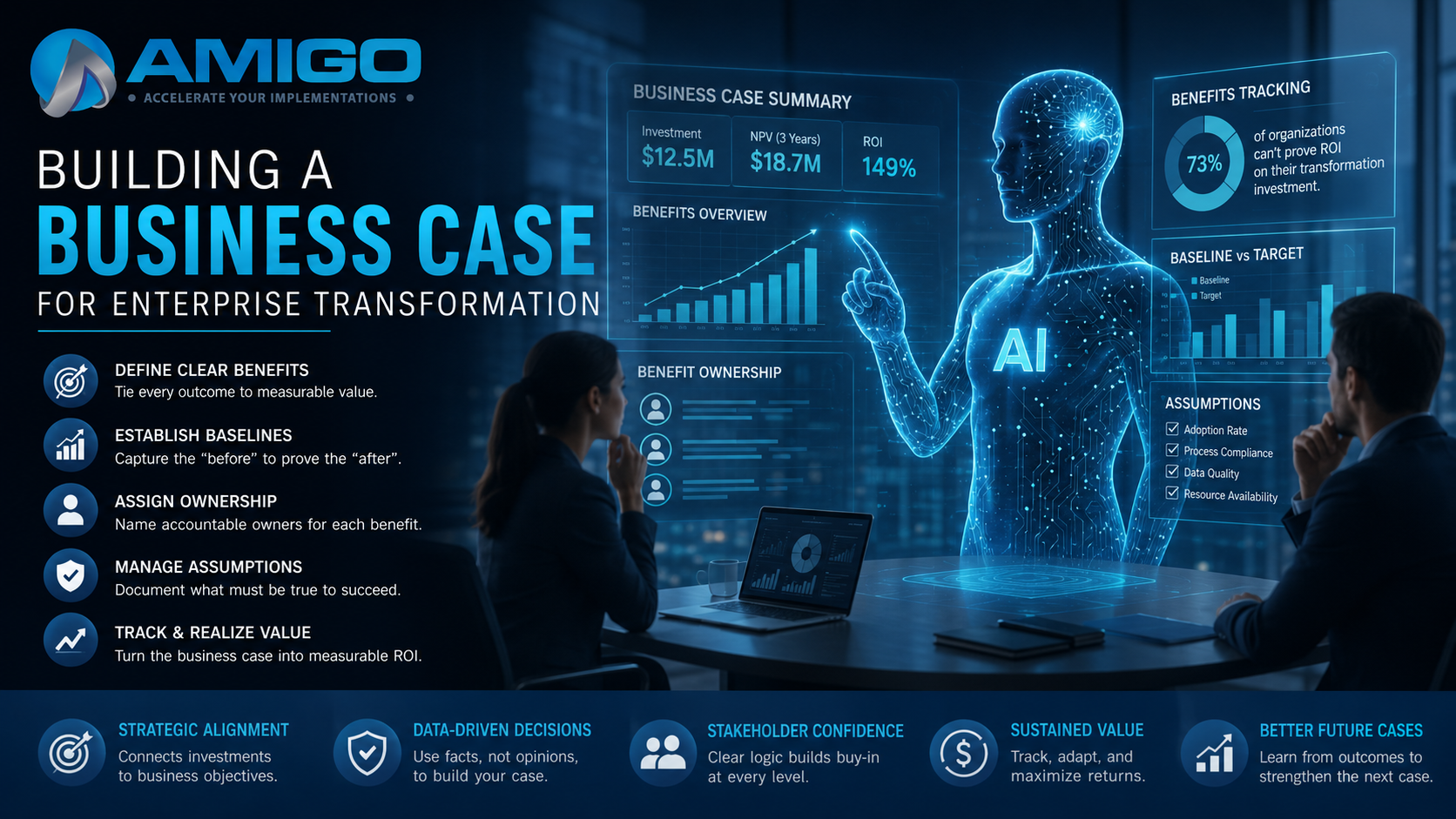
Building a Business Case for Enterprise Transformation
Distinguishes a defensible business case from a funding pitch, and explains why benefit ownership and baseline measurement need to be decided at the business case stage, not after the program is funded.
Read More →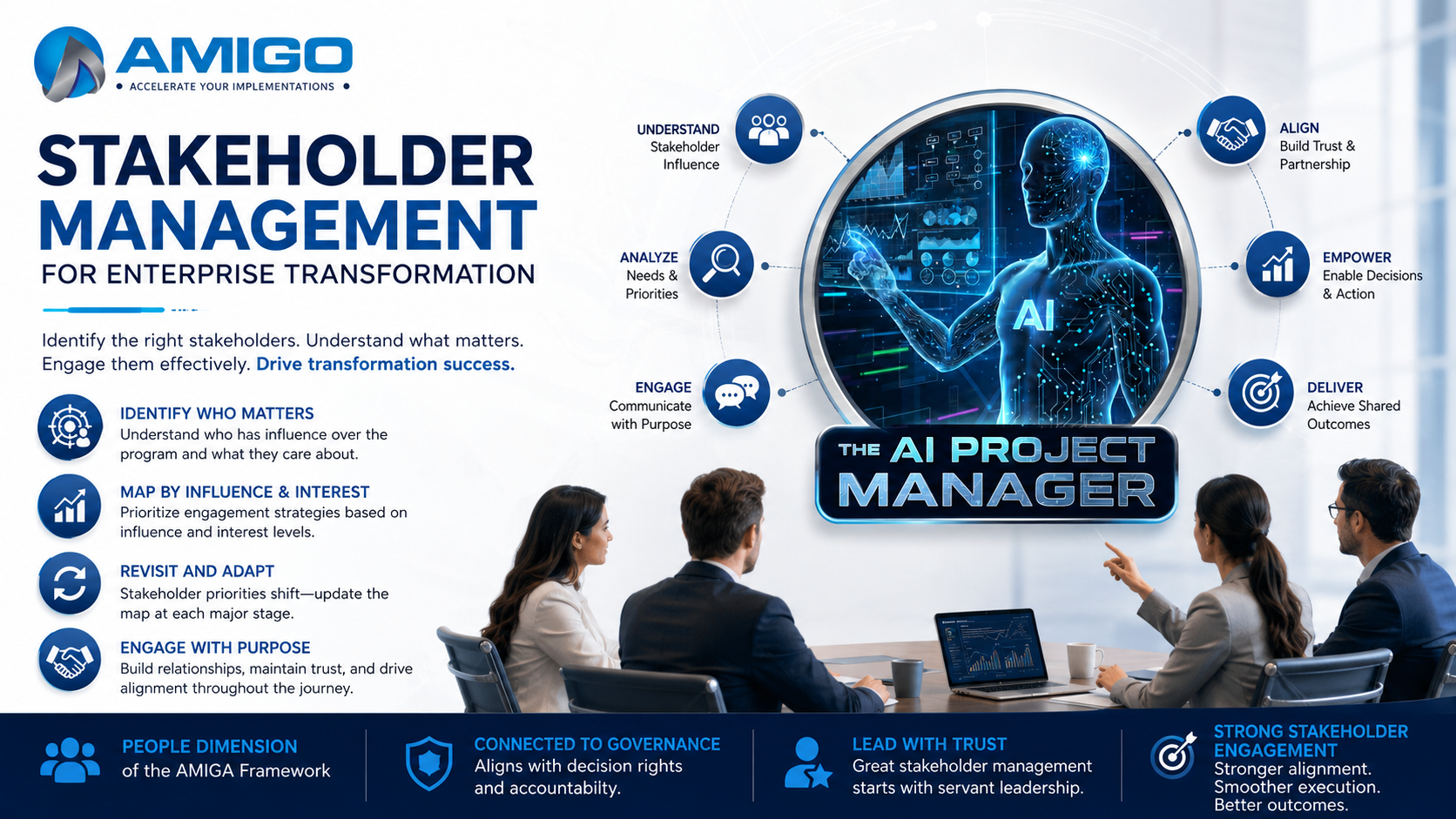
Stakeholder Management for Enterprise Transformation
Distinguishes stakeholder management from change management and communications, and walks through mapping stakeholders by influence and interest, prioritizing engagement effort, and sustaining it past go-live.
Read More →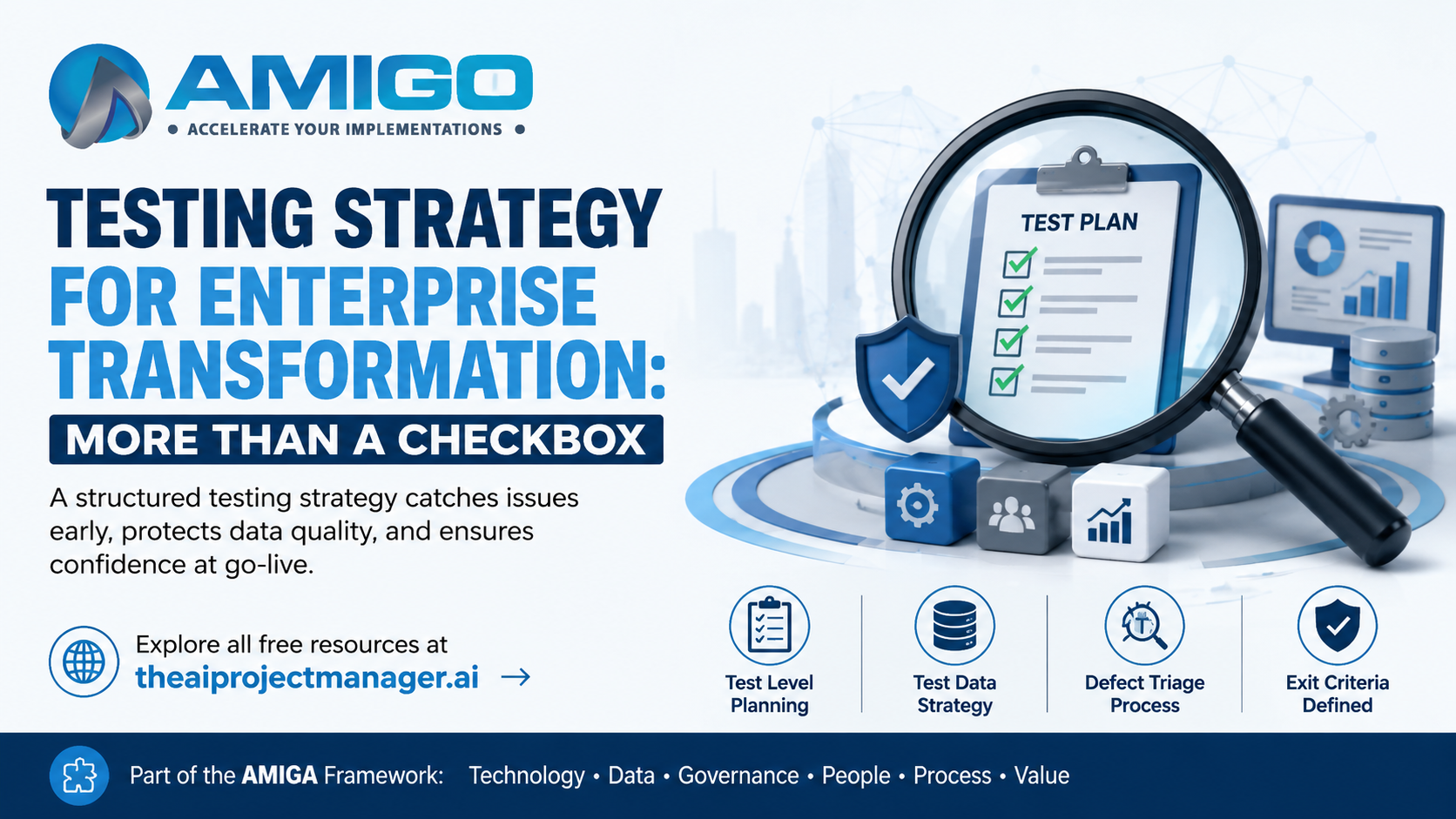
Testing Strategy for Enterprise Transformation: More Than a Checkbox
Explains why testing gets treated as a checkbox rather than a discipline in most transformation programs, and lays out what a real testing strategy covers across unit, integration, and user acceptance testing. -->
Read More →