This is one of the most dangerous misconceptions in enterprise transformation.
Go-live is not the completion of a transformation. It's the beginning of the most critical phase. The months immediately following go-live determine whether the investment the organization made will actually deliver its promised value or quietly underperform until the next transformation initiative is chartered to fix the problems this one left behind.
The Post-Go-Live Valley of Death
Every organization that has implemented a major enterprise system knows the post-go-live valley of death. User productivity drops as people adapt to new processes and workflows. Issues that weren't caught in testing surface in production. The support team is overwhelmed with volume. Business leaders who were expecting immediate productivity gains are instead seeing temporary degradation and questioning the program's value.
This valley is normal. It's predictable. And it's survivable if the organization has planned and resourced for it. What makes it dangerous is when programs don't plan for it: when support resources are demobilized at go-live, when hypercare plans are inadequate, when there's no structured mechanism for prioritizing and resolving the issues that inevitably emerge.
The Post-Go-Live Valley of Death- The AI Project Manager
What Effective Sustainment Requires
Hypercare — The intensive support period immediately following go-live, during which experienced team members remain engaged to address issues quickly, support users through the adoption curve, and ensure business continuity. Hypercare is expensive but far less expensive than the alternative of leaving a struggling organization without adequate support.
Incident Management — A structured process for capturing, triaging, prioritizing, and resolving the issues that emerge post-go-live. The quality of incident management determines how quickly the organization moves through the valley and how much permanent damage it absorbs along the way.
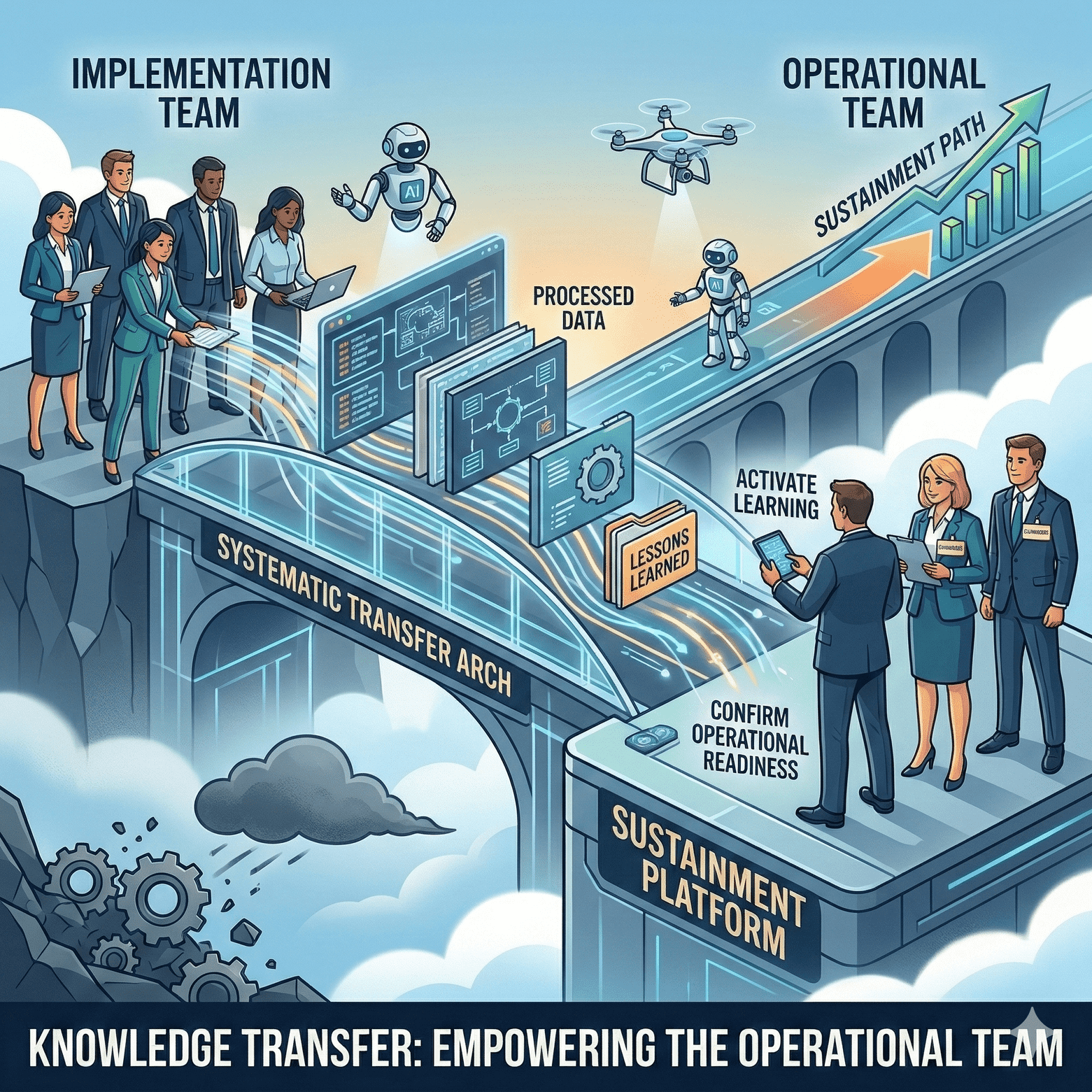
Knowledge Transfer — The systematic transfer of program knowledge from the implementation team to the operational team that will maintain the system going forward. This transfer is consistently underinvested in, which is why organizations find themselves dependent on the original implementation team years after go-live.
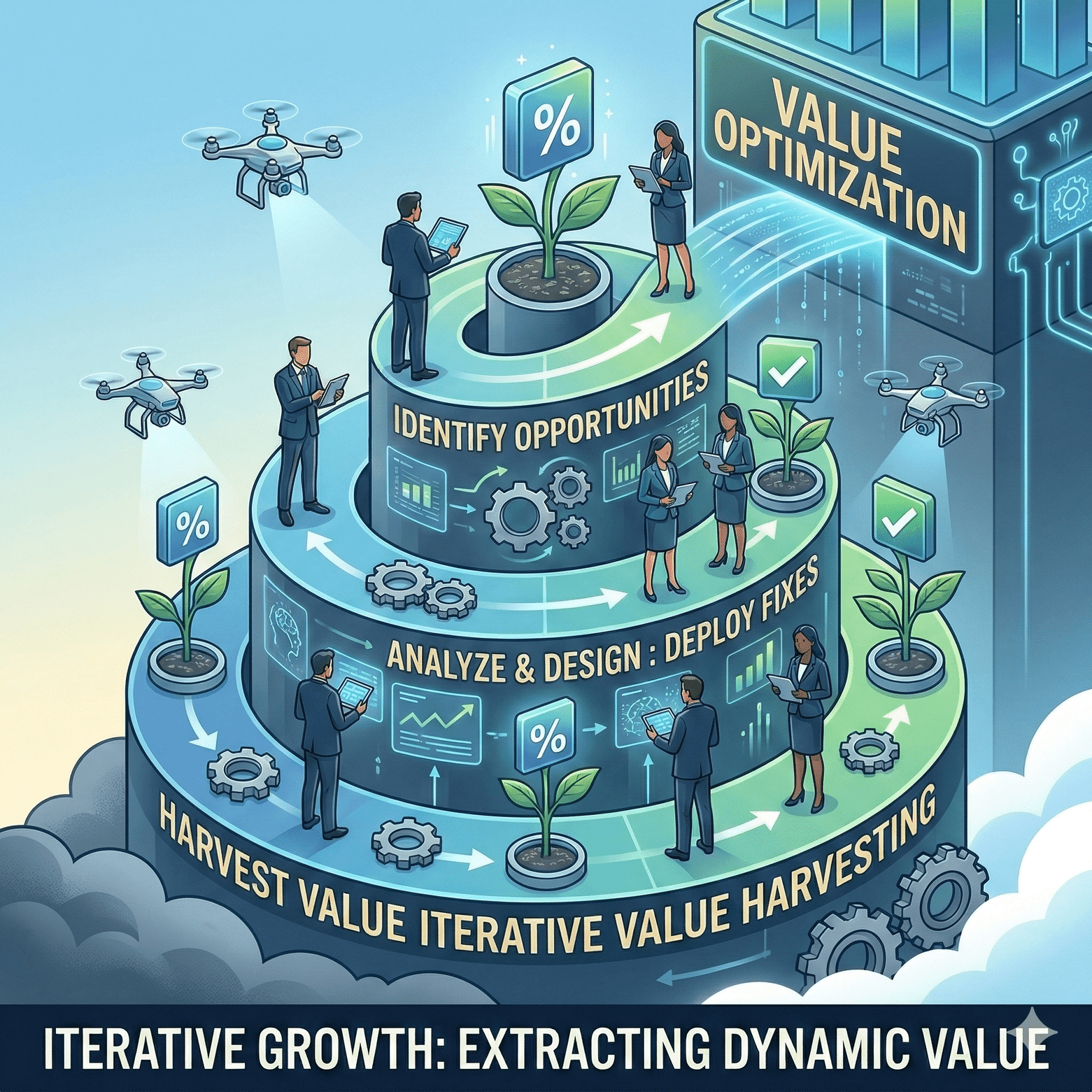
Continuous Improvement — The operational discipline of identifying opportunities to improve how the system is being used, how processes are operating, and how the organization is extracting value from its investment. Organizations that build continuous improvement into their operational model extract dramatically more value from their transformation investments than those that treat go-live as the end.
Benefits Realization: The Honest Accounting
Benefits Realization: The Honest Accounting -The AI Project Manager
Every transformation has a business case. That business case made specific claims: cost reductions, efficiency improvements, revenue enablement, working capital optimization. Sustainment is where those claims are either validated or quietly forgotten.
73% of organizations never measure whether their transformation investments delivered the benefits they promised. The programs that do measure and build accountability structures around those measurements create virtuous cycles of improvement and organizational learning. Those that don't become cautionary tales when the next transformation initiative is proposed and someone asks: 'Didn't we already do this?'
The finish line isn't go-live. The finish line is measurable, sustained value delivery. Building programs with that orientation from the beginning not as an afterthought is what separates transformations that matter from transformations that merely complete.
Ready to lead transformation at the highest level?
Get your copy of The AI Project Manager: A Transformation Leader's Guide to Enterprise Success on Amazon today:
https://www.amazon.com/Project-Manager-Successful-AI-Enabled-Transformation/dp/B0GRGW6TCD/ref
And visit www.theaiprojectmanager.ai for free resources, assessments, and the AI Project Manager Certification Program.